

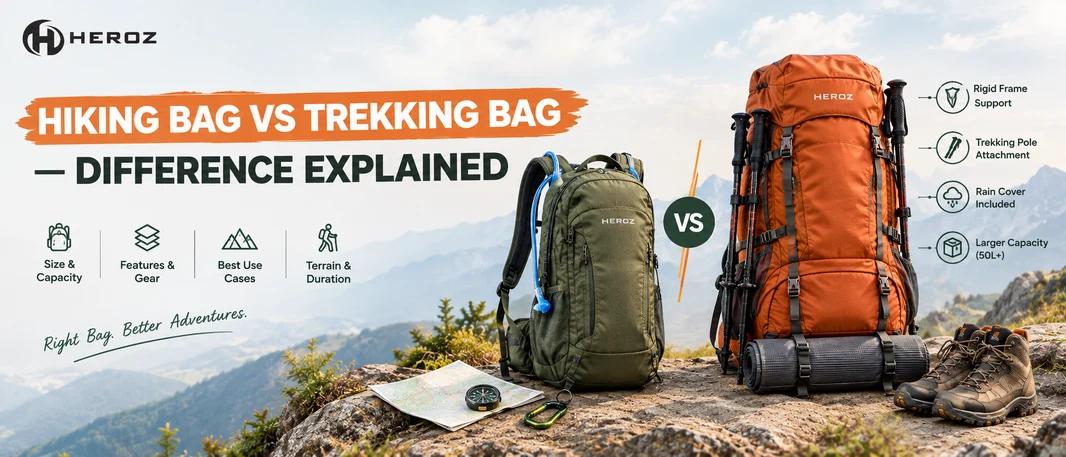
A backpack can make a noticeable difference to an outdoor trip. When the bag is too small, you may struggle to fit essential equipment. When it is unnecessarily large, you may end up carrying extra weight and unused space.
This is why understanding the difference between a hiking bag and a trekking bag is useful before choosing one.
Although the names are sometimes used interchangeably, the two categories generally serve different types of outdoor journeys.
A hiking backpack is commonly associated with shorter outings and lighter loads. A trekking backpack is generally intended for longer journeys where the amount of equipment increases.
The right choice, however, depends on more than the name of the backpack.
Hiking Bag vs Trekking Bag: The Basic Difference
Think about the duration of your trip first.
A day hike might involve several hours on a trail. You may only need water, snacks, a jacket, sunscreen, a phone, and a few safety essentials.
A multi-day trek is different. You may need several changes of clothing, additional food, sleeping equipment, camping gear, personal belongings, and other supplies.
That difference in gear volume affects the backpack you need.
Feature | Hiking Backpack | Trekking Backpack |
|---|---|---|
Main use | Short hikes | Multi-day journeys |
Typical load | Light | Medium to heavy |
Capacity | Small to medium | Medium to large |
Support | Basic to moderate | More developed load support |
Hip belt | Optional on smaller packs | Useful for heavier loads |
Gear attachments | Limited | More common |
Camping equipment | Usually limited | Often carried |
Weather protection | Useful | Important |
These are general guidelines. Backpack designs vary, so actual specifications should always be checked before buying.
What Is a Hiking Bag?
A hiking bag is designed around the needs of a shorter outdoor trip.
For a day on the trail, you don't normally need to carry all the equipment required for camping. Instead, the backpack needs to provide convenient access to essential items without becoming unnecessarily heavy.
A hiking backpack may be used for:
Day hikes
Nature trails
Forest walks
Hill walks
Short weekend activities
Lightweight outdoor trips
The features that matter can include a breathable back panel, comfortable shoulder straps, bottle pockets, hydration compatibility, quick-access storage, and rain protection.
What Is a Trekking Bag?
A trekking bag is designed for situations where the journey lasts longer and you need to become more self-sufficient.
The backpack may need to accommodate:
Extra clothing
Food
Water
Sleeping equipment
Camping equipment
First-aid supplies
Navigation tools
Personal items
Because the load can become heavier, trekking backpacks often include more advanced support systems.
A padded hip belt can help stabilize a larger load. Adjustable shoulder straps allow the backpack to sit correctly, while compression straps can reduce movement inside the pack.
Choosing the Right Capacity
Capacity is one of the first things people look at when buying an outdoor backpack.
A rough starting point is:
10–20L: Short walks and minimal gear
20–30L: Typical day hikes
30–40L: Longer day hikes or lightweight overnight trips
40–50L: Weekend trekking
50–60L: Multi-day journeys
60L+: Extended trips or equipment-heavy adventures
These ranges should not be treated as strict rules.
A person using lightweight camping equipment may need considerably less space than someone carrying bulky equipment.
Your packing style, season, route, and access to food or accommodation all influence capacity.
Support Becomes More Important as the Load Increases
A lightweight daypack doesn't necessarily need the same suspension system as a large trekking backpack.
As the load increases, features such as a hip belt, sternum strap, adjustable harness, padded shoulder straps, and supportive back panel become more valuable.
A properly fitted backpack should sit securely against your body without putting unnecessary pressure on your shoulders.
Don't assume that a backpack is comfortable simply because it has thick padding. Fit and adjustment matter too.
Hiking or Trekking in India
Outdoor conditions vary significantly across India.
A backpack suitable for a short trail in the Western Ghats may not be the best option for a longer Himalayan trek.
Himalayan Treks
For longer Himalayan routes, you may need:
Larger capacity
Stronger load support
Hip belt
Adjustable harness
Compression straps
Rain protection
Equipment attachment points
Western Ghats
For shorter Western Ghats routes, a smaller backpack may be enough. Depending on the route and season, useful features can include:
20–40L capacity
Breathable back panel
Water-resistant fabric
Rain cover
Easy-access pockets
Monsoon Conditions
Rain deserves additional attention during India's monsoon season.
A water-resistant backpack can help against light moisture, but prolonged heavy rain may require a rain cover. Sensitive items such as phones, documents, and electronics should have additional protection.
Water-resistant and waterproof are not interchangeable terms, so check the product specifications carefully.
Can a Hiking Bag Be Used for Trekking?
Yes, but only when its specifications match the trip.
For example, a 30–40L hiking backpack may be enough for a lightweight overnight adventure. However, it may not provide sufficient space or support for a longer camping trip.
Instead of focusing on the product label, check:
Capacity
Empty weight
Load support
Hip belt
Back system
Compartment design
Weather protection
Can a Trekking Backpack Be Used for Hiking?
A trekking backpack can certainly be used on a hike, but it may be unnecessary for a short outing.
A larger pack provides more space, but extra capacity can lead to overpacking. For a few-hour trail, a smaller backpack may be easier to organize and carry.
The goal is to match the backpack to the activity rather than choosing the largest available option.
Hiking Backpack vs Laptop Backpack
Not every outdoor trip requires a technical hiking or trekking backpack.
If your routine includes office or college during the week and occasional travel or outdoor activities, a laptop backpack may be more useful.
A suitable hybrid design might include:
Padded laptop compartment
Large main section
Water-resistant fabric
Comfortable shoulder straps
Space for clothing
Practical organization
A trekking backpack should be chosen when outdoor load carrying is the main requirement. A laptop backpack makes more sense when protecting and organizing electronics is the priority.
How to Choose Your Backpack
Before purchasing, answer five questions.
1. How long is the trip?
A few hours, one day, or several days?
2. What equipment are you carrying?
Make a complete list rather than guessing.
3. How heavy will the load be?
Capacity and load weight are separate considerations.
4. What weather will you encounter?
Rain, humidity, heat, and cold can all affect the features you need.
5. Does the backpack fit properly?
Check the shoulder straps, back panel, sternum strap, and hip belt where available.
Common Buying Mistakes
One common mistake is buying a backpack based only on its litre capacity.
Another is choosing a large bag because it looks more capable. Bigger isn't always more comfortable.
Ignoring fit is another problem. Even a well-designed backpack can become uncomfortable if it doesn't sit correctly.
Finally, don't confuse water resistance with complete waterproofing. If you're travelling during heavy rain, use additional protection for important items.
Final Thoughts
The difference between a hiking bag and trekking bag is mainly about duration, load, support, and the type of equipment you're carrying.
A hiking backpack can be a practical choice for short trails and day trips. A trekking backpack is generally more suitable for multi-day journeys where you need additional equipment and stronger load support.
For work, college, and occasional travel or outdoor activities, a laptop or travel backpack may provide a better combination of organization and versatility.
Instead of choosing a backpack simply because it is labelled "hiking" or "trekking," consider the journey first. Your route, gear, weather, and carrying requirements should determine the backpack you choose.