

How to Pack a Hiking Backpack Properly: A Complete Guide to Comfort and Organisation
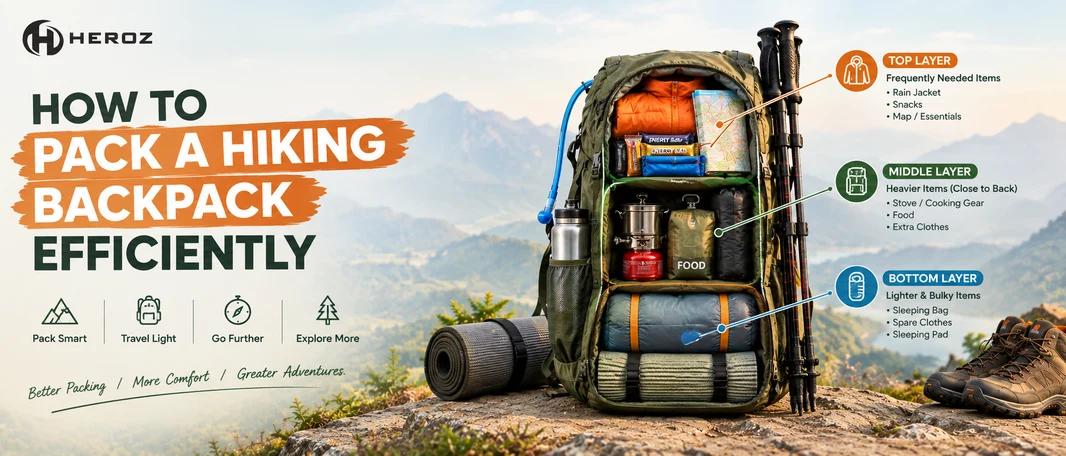
A hiking trip involves more than choosing a destination and putting a few essentials into a bag. The way you pack your backpack can affect how comfortably you walk, how easily you access your equipment, and how well your belongings stay protected throughout the journey.
Whether you are preparing for a short day hike or a two- or three-day trek, an organised packing system can help you carry your equipment in a more balanced and practical way.
The key is to understand what belongs in each section of your backpack and how the duration and conditions of your trip affect your packing list.
1. Start by Planning Your Packing List
Before placing anything inside your backpack, spread your equipment out on a clean surface.
Separate your belongings into categories such as clothing, food, water, electronics, personal items, and emergency equipment.
This makes it easier to identify duplicate items and avoid carrying things that have no clear purpose for the journey.
The length of the hike is an important consideration. A short outing near a city may require only a few essentials, while a multi-day trek can involve additional clothing, food, and sleeping equipment.
Understanding backpack capacity
Hiking duration | General capacity | Typical equipment |
|---|---|---|
Short hike | 15–25L | Water, snacks, jacket, first aid |
Day hike | 25–35L | Food, water, extra layer, essentials |
2–3 day trek | 40–50L | Clothing, food, sleeping gear |
Longer trek | 50L+ | Additional clothing and camping equipment |
These capacities are general estimates, not strict requirements. The amount of equipment you need depends on the route, season, weather, and personal requirements.
You can explore the HEROZ hiking backpack collection when comparing backpack options.
2. Arrange Your Backpack in Storage Zones
A backpack is easier to manage when you think of it as several sections instead of one large compartment.
Bottom section: lightweight equipment
The bottom section is suitable for items that you are unlikely to need until you stop for the day.
Spare clothing, sleeping equipment, and lightweight accessories can go here. Avoid placing very heavy items at the bottom because they may make the backpack pull backwards.
Soft clothing can also fill gaps around other equipment.
Middle section: heavier equipment
Compact, heavier items should generally be placed in the central part of the backpack, close to your back.
Depending on your trip, this may include food, cooking equipment, or other dense gear.
Keeping the weight close to your body helps reduce unnecessary movement. Try to distribute the load evenly instead of placing a heavy object entirely on one side.
Top section: frequently used items
The top section is useful for equipment you may need while walking.
Keep items such as these accessible:
Rain jacket or light fleece
Snacks and small food supplies
Sunscreen and sunglasses
Navigation equipment
Small first-aid items
The purpose of this arrangement is simple: you should not need to empty the entire backpack to find something you need during the hike.
3. Make Good Use of External Pockets
External pockets are useful for small items that need to remain accessible.
Water bottles, tissues, snacks, and small accessories can often be stored in these areas.
However, avoid filling every outer pocket simply because space is available. Too much weight on the outside can affect balance and cause the backpack to swing while walking.
Keep valuable electronics and delicate equipment protected inside the main compartment or a suitable padded section.
4. Plan Where to Carry Water
Water is essential during outdoor activities, but it is also one of the heavier items you will carry.
If your backpack has a hydration sleeve, place the reservoir in the sleeve before filling the remaining compartments. If you use bottles, position them so the overall load remains reasonably balanced.
For longer hikes, splitting water between containers may make access easier and help distribute the weight.
The amount of water required depends on the distance, temperature, terrain, and availability of refill points. Plan according to the actual conditions rather than using one fixed amount for every trip.
5. Protect Your Laptop and Other Electronics
Some journeys combine outdoor travel with office work. In these situations, the way you store electronics becomes particularly important.
A laptop should be carried inside a properly padded compartment rather than placed loosely between clothes and other equipment.
Avoid placing rigid objects such as bottles or cooking equipment directly against the laptop. Pressure from hard objects can damage the device if the backpack is compressed or dropped.
For work-and-travel use, the HEROZ Heden 40L Laptop Backpack with USB Charging is one option to explore.
A dedicated trekking backpack, however, should be selected according to outdoor requirements such as capacity, fit, ventilation, and load distribution.
6. Prepare for Rain and Changing Weather
Weather conditions can change quickly during a hike. A backpack rain cover can help protect the exterior of your bag, but it should not be your only protection for sensitive belongings.
Electronics, documents, and spare clothing can be stored in waterproof pouches or dry bags when additional protection is needed.
This is particularly useful during monsoon outings, where exposed equipment may become wet even during a relatively short period of rainfall.
7. Prevent Equipment From Moving
A properly packed backpack should feel reasonably stable while walking.
Loose items can shift from one side to another and make the load uncomfortable. Compression straps can help reduce unnecessary movement, while clothing and soft equipment can fill gaps between packed items.
Avoid compressing the backpack so tightly that essential equipment becomes difficult to reach.
Before starting the hike, put the bag on and walk around for a few minutes. If something moves excessively, adjust its position before leaving.
8. Pack Differently for Day Hikes and Multi-Day Treks
A day hike generally requires fewer supplies than an overnight trek.
For a day hike, consider water, food, a lightweight rain jacket, an extra layer, first-aid supplies, sun protection, navigation tools, a phone, a power bank, personal medication, and small emergency items.
For a two- or three-day trek, organise clothing, food, sleeping equipment, toiletries, electronics, and emergency supplies separately before packing.
Choose versatile clothing layers instead of packing unnecessary outfits for every possible situation. Small accessories and toiletries can also add considerable weight when several days of equipment are combined.
For longer treks, the HEROZ Hunter 80L Hiking/Trekking Backpack is another product you can explore.
9. Avoid Common Packing Mistakes
Several common habits can make a hiking backpack less comfortable:
Putting heavy items at the bottom: This can cause the backpack to pull backwards.
Overloading the outside pockets: Too much external weight can affect balance.
Burying important equipment: A rain jacket, first-aid kit, or navigation tool should be easy to reach.
Carrying unnecessary items: Duplicate clothing and oversized toiletries add weight without serving a clear purpose.
Ignoring weight distribution: A backpack that is much heavier on one side can feel uncomfortable during longer walks.
The aim is to carry what you need without filling every available space.
10. Use a Final Checklist Before Leaving
Before starting your trip, check your backpack for the following:
Essentials: Water, food, phone, power bank, first-aid kit, navigation equipment.
Weather protection: Rain jacket, extra layer, sun protection, backpack rain cover.
Personal items: Medication, tissues, small toiletries, identification, and essential documents.
Longer treks: Extra clothing, sleeping equipment, cooking equipment, additional food, and personal hygiene supplies.
Adjust the list to the trail, season, distance, and local conditions. Do not remove genuine safety essentials simply to reduce weight.
Conclusion
Packing a hiking backpack properly is mainly about organisation and balance rather than maximum capacity.
Place heavier equipment close to your back, keep less frequently used lightweight items toward the bottom, and store frequently needed essentials where you can reach them quickly.
For short hikes, keep the setup simple. For longer treks, organise your gear before packing and pay attention to the total weight.
Whether you use a compact hiking bag, a trekking backpack, or a laptop backpack for a mixed work-and-travel trip, thoughtful packing can make your equipment easier to carry and manage.
Explore HEROZ Hiking Backpacks for outdoor backpack options.