

Every journey becomes easier when you have the right essentials with you. Whether you are planning a weekend getaway, a business trip, or a mountain adventure, choosing the right backpack can make a big difference to your comfort and convenience. However, not every backpack is designed for the same purpose.
Understanding the difference between a travel backpack and a hiking backpack will help you make a smarter choice based on your destination, packing requirements, and travel plans.
What Is a Travel Backpack?
A travel backpack is designed for holidays, business trips, commuting, and city exploration. It offers practical storage for clothing, electronic devices, toiletries, documents, and other everyday essentials.
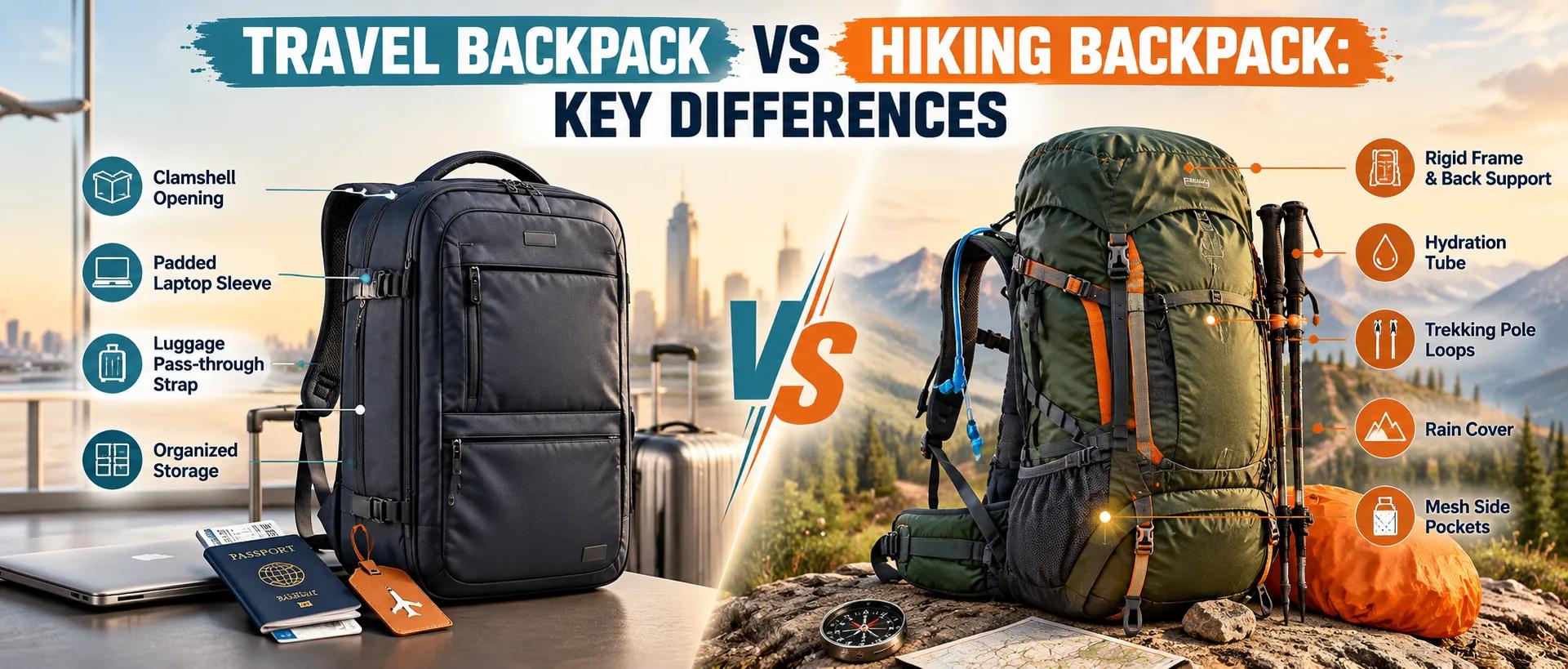
Many travel backpacks include multiple compartments, organiser pockets, and padded laptop sleeves. Some models also feature luggage trolley sleeves, making them convenient for airport travel.
A travel backpack for men can be particularly useful for people who frequently travel for work, attend meetings in different cities, or prefer carrying their essentials in one organised bag.
When selecting a travel backpack, consider its capacity, laptop compatibility, shoulder straps, material, and ease of access. These features can help you stay organised throughout your journey.
What Is a Hiking Backpack?
A hiking backpack is specifically designed for outdoor activities such as trekking, camping, mountain hiking, and long-distance walking. Unlike many travel backpacks, hiking models prioritise load distribution, stability, and carrying comfort.
Depending on the design, a hiking backpack may include padded hip belts, adjustable shoulder straps, compression straps, water bottle holders, and external loops for outdoor equipment.
These features can help distribute weight more effectively when carrying food, water, extra clothing, and camping supplies over long distances.
If you enjoy exploring nature or planning multi-day trekking trips, choosing a hiking backpack with a suitable fit and supportive design can make your outdoor experience more comfortable.
Travel Backpack vs Hiking Backpack: Key Differences
Although both backpack types help you carry your belongings, their features serve different needs.
1. Storage and organisation
Travel backpacks often provide organised compartments for laptops, chargers, clothes, and travel documents. Hiking backpacks usually focus on storing outdoor equipment, food, water, and additional clothing.
2. Comfort and support
Hiking backpacks commonly include supportive frames and padded hip belts on suitable models. These features can be beneficial when carrying heavier loads over long distances. Travel backpacks are often designed for shorter walks between airports, hotels, offices, and transport connections.
3. Accessibility
Many travel backpacks offer front-opening designs that allow you to access packed belongings easily. Hiking backpacks often use top-loading designs, although the layout varies by model.
4. Laptop protection
A travel backpack is generally a better choice when you regularly carry a laptop. Many models include dedicated padded compartments to protect electronic devices during everyday travel.
5. Intended use
Travel backpacks are ideal for city trips, holidays, commuting, and business travel. Hiking backpacks are better suited to trekking, camping, and outdoor adventures that require carrying equipment for extended periods.
How to Choose the Right Backpack for Your Lifestyle
Before purchasing a backpack, think about the activities you do most frequently. Your daily routine and travel plans should guide your decision.
If you regularly travel by train or plane, visit different cities, or need to carry a laptop alongside your clothes, a travel backpack may be the more practical option. Look for organised storage, comfortable shoulder straps, durable materials, and a capacity that suits your packing habits.
If you spend several hours walking on trails or carrying camping supplies, prioritise a hiking backpack with suitable support, adjustable straps, and enough space for outdoor essentials.
Capacity is another important consideration. A 20–30L backpack may suit daily commuting or light day trips, while a 30–40L model can work for many weekend journeys. Larger bags may be useful for extended trips, depending on your equipment and packing needs.
Remember that a larger backpack is not automatically a better backpack. Fit, weight, and intended use are equally important.
Can You Use a Travel Backpack for Hiking?
Yes, a travel backpack can work for short walks and easy day hikes, especially when you carry a light load. However, it may not provide the support, ventilation, or stability required for challenging trails.
Before using one for outdoor activities, check its comfort, capacity, water protection, and ability to carry essential supplies.
Similarly, a hiking backpack can be used for travel, but its tall shape, external straps, or top-loading design may be less convenient in crowded transport or airports. Always check your airline's baggage dimensions and weight limits before flying.
Explore Practical Travel Backpack Options
Finding a backpack that balances comfort, organisation, and everyday practicality can make preparing for a journey much simpler.
If you are searching for a bag suitable for holidays, work, and daily travel, explore the HEROZ backpack collection to compare available styles and features.
For a more detailed breakdown of capacity, storage, comfort, and intended use, read this guide to travel backpacks vs hiking backpacks.
Compare the specifications of individual models carefully, especially laptop compatibility, dimensions, material, and carrying features, before making your decision.
Final Thoughts
Choosing between a travel backpack and a hiking backpack depends on how you plan to use it. A travel backpack is generally more suitable for flights, holidays, commuting, and carrying electronic devices. A hiking backpack is often the better option for trekking, camping, and outdoor activities involving heavier loads.
By considering your destination, packing requirements, and comfort needs, you can find a backpack that supports your lifestyle and helps make every journey more enjoyable.